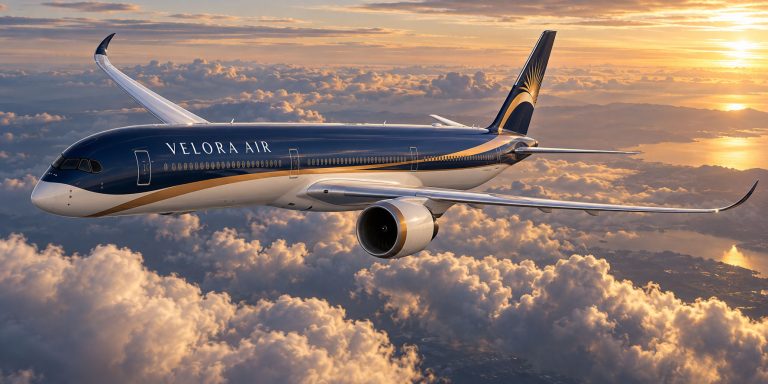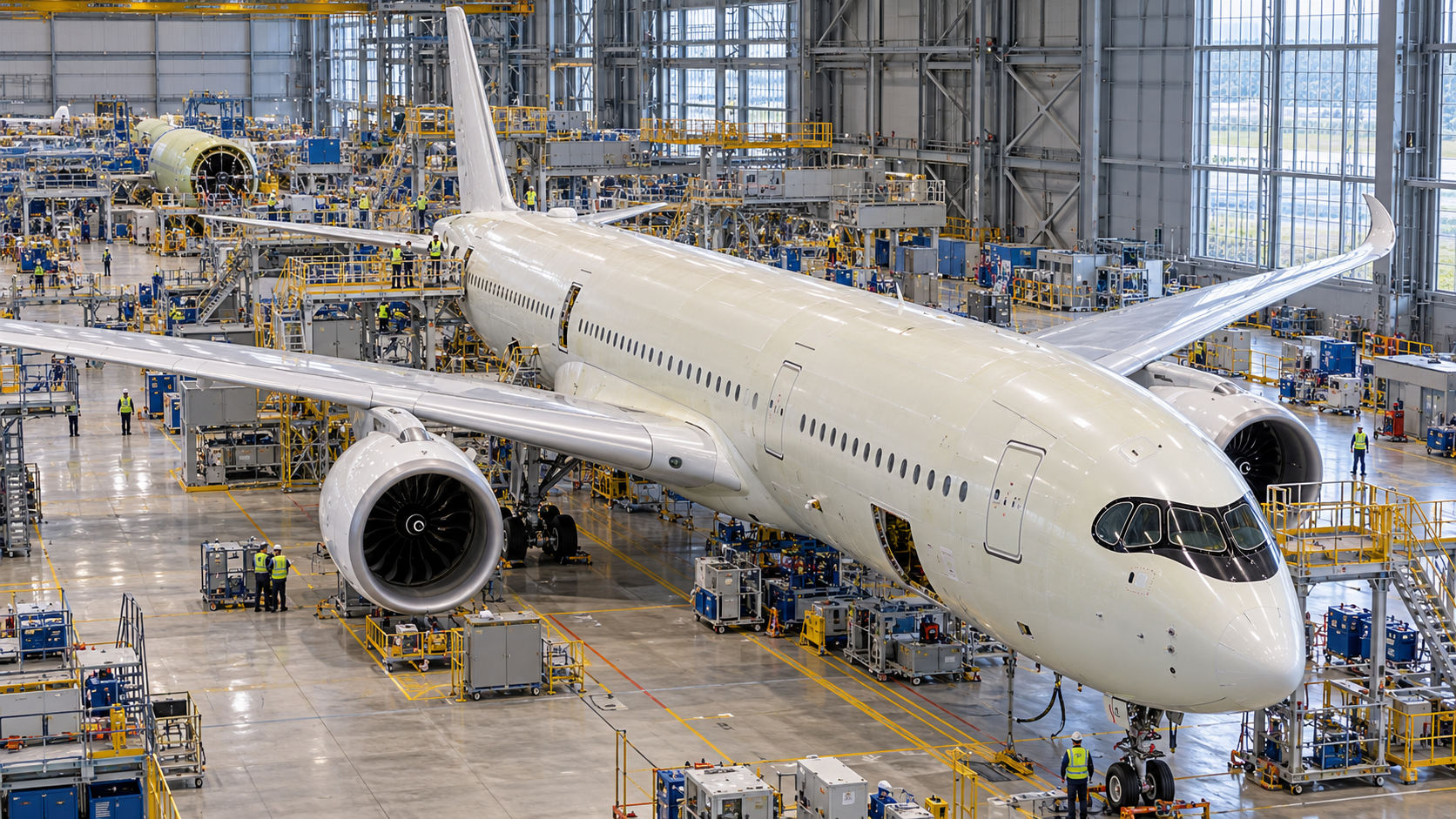
Airbus began as a European effort to build a competitive passenger aircraft. It has since grown into a manufacturer of airliners, helicopters, military aircraft and space systems. Its name is most familiar from airport departure boards, where aircraft ranging from the compact A220 to the long-range A350 serve routes across the world. The company’s history is also a story of cooperation: components designed and built in different countries come together as finished aircraft.
A European aircraft maker takes shape
In the late 1960s, aerospace companies in several European countries began working together on a new passenger jet. Airbus Industrie was formally established on 18 December 1970. Its first aircraft, the A300, was a widebody powered by two engines at a time when many large long-distance jets used three or four. The A300 made its first flight on 28 October 1972 and gave the new consortium an aircraft it could take to airlines around the world.
The partners brought different skills and facilities to the programme. Airbus developed an industrial model in which major aircraft sections were produced at separate sites and brought together for final assembly. That approach enabled European companies to share the expense and technical challenge of developing aircraft, though it also required close coordination across borders. Over time, cooperation between the founding companies became a more integrated aerospace business.
The A320 changes the company’s reach
The aircraft that made Airbus familiar to many more passengers was the A320. It first flew in February 1987 and entered service in 1988. Airbus introduced full digital fly-by-wire flight controls on the A320, allowing a pilot’s inputs to be interpreted by computers before they move the aircraft’s control surfaces. Its cockpit and systems established an approach Airbus would carry into later aircraft.
The A320 developed into a family of aircraft of different sizes. That gave airlines a way to choose capacity for particular routes while operating closely related types. Later versions, including the A320neo family, continued to update the design rather than replace it with an entirely unrelated aircraft. The A320 family became central to Airbus’s business and helped establish it as a long-term competitor in the market for short- and medium-haul airliners.
Airbus also developed larger aircraft for longer journeys. The A330 became a twin-engine widebody, while the four-engine A340 served long-range routes. These programmes gave airlines alternatives at different sizes and ranges and helped Airbus build a more complete passenger-aircraft line-up.
The A380 and A350
The A380 was Airbus’s most ambitious passenger aircraft. Designed with two full-length passenger decks, it first flew in 2005 and entered commercial service in 2007. Its size made it especially suited to carrying large numbers of passengers between busy hubs. But airline preferences and the economics of long-haul flying changed. With too few further orders to sustain production, Airbus ended A380 deliveries in 2021. The aircraft remains in airline service, and its end of production should not be mistaken for its disappearance from the skies.
The A350 took a different approach to long-haul travel. This twin-engine aircraft uses a substantial amount of composite material and comes in two principal passenger sizes, the A350-900 and A350-1000. The first A350 entered airline service in January 2015. Its range and capacity allow airlines to use it on a variety of intercontinental routes without needing an aircraft as large as the A380. For Airbus, the A350 demonstrated that its international production system could deliver an entirely new generation of widebody aircraft.
More than passenger jets
Not every aircraft wearing the Airbus name began as an Airbus design. The A220 was developed by Canada’s Bombardier as the C Series. Airbus joined the programme in 2018, and the aircraft became part of its commercial range under the A220 name. It gave Airbus an aircraft for a smaller seating category than its A320 family.
Airbus’s activities also extend beyond commercial jets. Airbus Helicopters builds rotorcraft for civilian, public-service and military customers. Its defence business includes aircraft such as the A400M transport and A330 MRTT tanker, while its space activities include satellites and related systems. The company that began with one collaborative airliner programme is now involved in several different areas of aviation and aerospace.
Airbus today
Airbus continues to manufacture and develop aircraft across its passenger range. It is also developing the A350F freighter, extending the A350 programme beyond passenger services. Its aircraft are assembled from components made at sites in several countries, preserving the international approach that shaped the original A300.
That history makes Airbus more than a list of aircraft models. The A300 established a European manufacturer, the A320 brought its technology to short-haul flying, the A380 tested the limits of passenger-aircraft size, and the A350 strengthened its long-haul range. Each programme answered a different question about how airlines might fly. Together, they explain how a collaboration formed around one aircraft became one of the defining names in modern aviation.