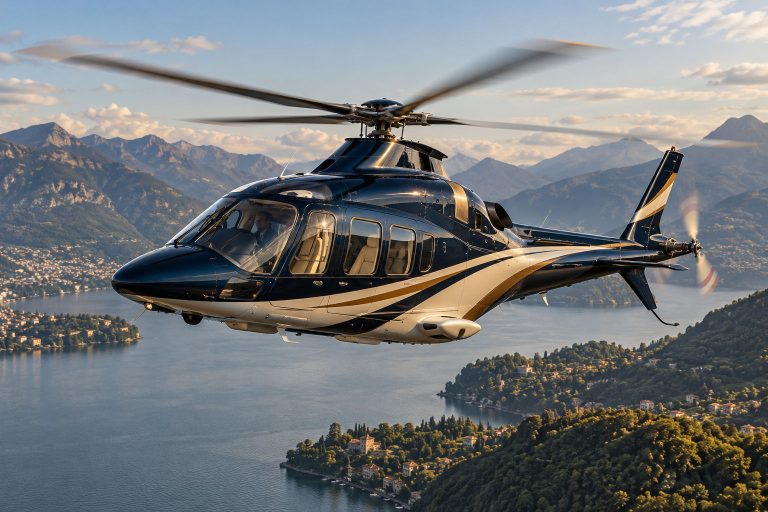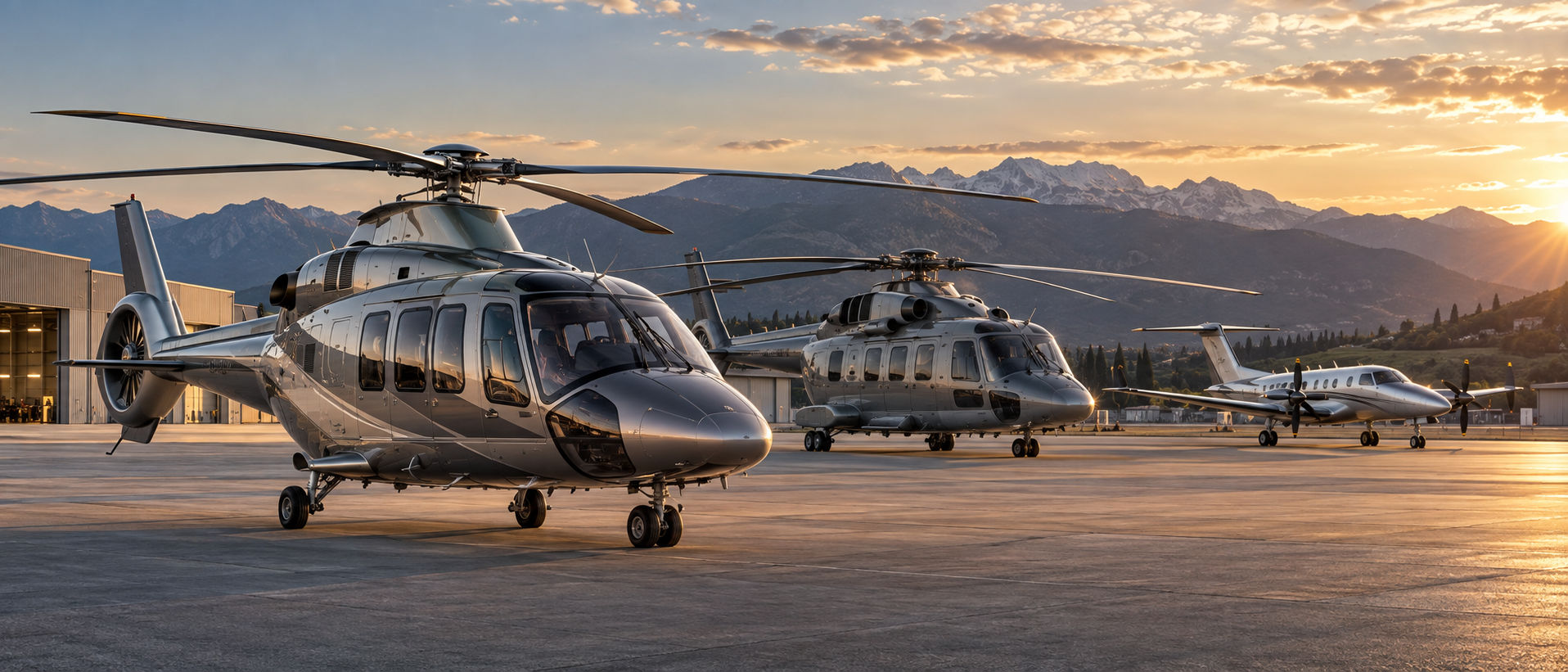
Before Leonardo: Agusta, Westland and Italy’s Aviation Industry
Leonardo’s name is relatively recent, but several of the businesses behind it were building aircraft long before the company adopted it. The story begins in separate workshops, factories and national industries. In Italy, Giovanni Agusta became involved in aircraft design in the early twentieth century. The Agusta business grew into an aviation manufacturer, later becoming especially associated with helicopters. In Britain, Westland began building aircraft during the First World War and developed its own place in the British aircraft industry. Neither company began life as a branch of a future Leonardo group; their histories would meet much later.
The early aircraft industry was shaped by a constant exchange between civilian invention and military demand. Designers developed new structures, engines and production methods, while government orders could determine which projects survived. The two world wars accelerated technical progress but also created sharp changes in demand when fighting ended. A manufacturer might have the skills to make aircraft yet still need new customers, new products or partnerships to keep its factories working.
Agusta moved progressively towards rotary-wing aircraft after the Second World War. Licensing provided a practical route into helicopter production: instead of beginning with a completely new design, a manufacturer could build and support a proven machine while learning the specialised demands of rotor systems. Helicopters introduced problems unlike those of fixed-wing aircraft. Their blades had to generate lift while rotating, their transmissions carried substantial loads, and vibration, handling and maintenance all needed close attention. Experience gained through licensed production helped develop the workforce and facilities required for original designs.
Westland also became a helicopter specialist. Its work connected British production with overseas designs, while its own development and manufacturing capabilities grew around military and civil requirements. The company’s later association with aircraft such as the Sea King and Lynx made it an important name in British rotary-wing aviation. These were products of a particular industrial landscape, with customer requirements and international licensing arrangements influencing what could be built and sold.
Other strands of Leonardo’s ancestry developed beyond helicopters. Italy had aircraft manufacturers, electronics firms and defence engineering businesses that would eventually be gathered together through corporate consolidation. Their products ranged from aeroplanes to radar and communications equipment. Understanding Leonardo therefore requires more than following one factory or one famous aircraft. It means tracing how separate engineering traditions were brought under a common owner. The vehicle for that consolidation was an Italian company founded in 1948: Finmeccanica.
That distinction is useful when looking at a historical photograph. The maker’s name on an aircraft records who was responsible at the time, not necessarily who supports its descendants today. A century of mergers can compress several rich stories into one current logo, but each predecessor brought its own people, products and technical strengths.
Finmeccanica Takes Shape and Expands into Aerospace
Finmeccanica was established in 1948 as Società Finanziaria Meccanica, a holding company for mechanical engineering and shipbuilding businesses associated with Italy’s state industrial group, IRI. It did not start as a helicopter maker under another name. Its early role was to oversee and reorganise industrial companies at a time when Italy was rebuilding after the Second World War. The aviation identity familiar today emerged over decades as the group’s interests shifted and expanded.
Post-war aerospace projects demanded resources beyond those needed to build a single aircraft. Manufacturers had to pay for design teams, test programmes, production equipment and long-term support. Electronics also became increasingly central to flight. Radar, navigation and communications were no longer peripheral additions; they helped determine what an aircraft could do. For a group able to bring engineering businesses together, aviation and defence offered opportunities to connect aircraft manufacture with the systems carried aboard them.
The companies that eventually came into Finmeccanica’s orbit retained their own histories. Aeritalia and Aermacchi contributed important fixed-wing expertise, while Agusta represented a growing helicopter industry. Electronics businesses such as Selenia added another dimension. Finmeccanica’s story is therefore not a tidy sequence in which one factory invented every product. It is a story of acquisition, combination, shared programmes and industrial strategy. Aircraft could be designed by one company, equipped by another and sold through an international partnership.
By the 1980s, European aerospace firms were working in markets where development costs were rising and national demand alone was often insufficient. Finmeccanica increasingly looked to consolidation and cooperation. Leonardo’s own history describes how the group gathered leading Italian companies across aeronautics, helicopters, electronics, defence and space. That breadth would eventually become a distinguishing feature: the same corporate family could make aircraft, produce onboard systems and participate in programmes extending beyond aviation.
Finmeccanica changed its legal form into a joint-stock company in 1987, was listed on the Milan stock market in 1992 and went through privatisation in 2000. Those steps belonged to a wider transformation in how the group was financed and managed. International partnerships became more important as it sought the scale to compete beyond Italy. At the same time, one of the most consequential developments for its future helicopter business was already under way in Agusta’s own design office. An aircraft first flown in 1971 would help show that the Italian manufacturer could create an original helicopter for the world market.
This long period of change helps explain why the founding date can be misleading when presented without context. Finmeccanica’s 1948 origin is the date of the corporate predecessor, not the start of aviation work by every firm it later owned. Agusta and Westland already had separate histories, and some technologies entered the group only decades afterwards.
Agusta and Westland Join Forces in Helicopter Manufacturing
Agusta’s A109 first flew on 4 August 1971. Designed in Italy as a twin-engined helicopter, it represented a significant change for a company that had built experience with licensed types. The programme moved Agusta towards designing, certifying and selling its own helicopters. Italian and United States certification followed in 1975, opening opportunities beyond its home market. The A109’s long development history would eventually produce the AW109 family, the subject of a separate aircraft guide.
An original design demanded more than a successful first flight. Agusta had to refine the helicopter, prove it met certification requirements, support operators and adapt it to different uses. The A109’s combination of speed, compact dimensions and twin engines attracted customers in executive transport, public service and other roles. Its success helped establish a product identity that later survived changes in company ownership and branding. It also demonstrated that a helicopter manufacturer could use one basic family as the starting point for continuing development rather than replacing it immediately with an unrelated aircraft.
Across the Channel, Westland brought its own engineering experience and customer relationships. The two companies began cooperating on the large helicopter programme that became the EH101, later known as the AW101. Building a helicopter for demanding naval and transport roles required significant investment and a wider range of capabilities than either company’s smaller projects. Their cooperation was a practical response to the economics of modern helicopter development, as well as a step towards a closer corporate relationship.
In 2000, Agusta and Westland were combined in AgustaWestland, initially a joint venture involving Finmeccanica and the British group GKN. Finmeccanica became its sole owner in 2004 after acquiring GKN’s share. The dates matter because the merger and the full takeover were separate events. The combined business brought Italian and British sites, design traditions, workers and established helicopter families under one name. It could pursue international customers with a broader range of machines and support services.
The partnership did not erase where the aircraft came from. The A109 remained rooted in Agusta’s earlier design work; Westland’s historical aircraft and the joint EH101 programme had different origins. As AgustaWestland grew, it had to manage those inheritances alongside the development of new products. Its helicopters would fly in emergency medical work, search and rescue, offshore transport, military operations and private service. With the corporate framework in place, the challenge became building a coherent range capable of serving those very different customers.
For the future AW109 entry, this company history supplies important context without taking over the aircraft’s story. The helicopter’s variants, specifications and operating history belong in that guide. Here, its importance is what it tells us about Agusta: a manufacturer ready to move from building other companies’ designs to supporting a design of its own internationally.
Building a Global Aircraft and Helicopter Portfolio
During the 2000s and early 2010s, AgustaWestland developed a range that extended well beyond one famous light helicopter. The AW139 became an important medium-sized design for transport, emergency services and other operators. The AW169 and AW189 broadened the range into different weight classes. The company presented the AW139, AW169 and AW189 as a family sharing aspects of design philosophy, equipment, training and support. For an operator managing more than one type, common approaches could help crews and maintainers move between aircraft.
The older lines continued to develop as well. Versions of the AW109 remained in use for missions where a small twin-engined helicopter offered speed and flexibility. The AW101 served demanding military and search and rescue roles, while the AW159 Wildcat represented another strand of the British helicopter lineage. These types were not interchangeable: their size, equipment and operating costs suited different jobs. A manufacturer with several families could offer customers a choice without pretending that one airframe answered every requirement.
Finmeccanica’s aircraft interests were wider than rotorcraft. Through its aerospace businesses it worked on military trainers, transport aircraft, regional airliners and aircraft structures. Participation in joint programmes showed how modern aircraft manufacture crosses company borders. Components may be built by different partners, and an aircraft’s identity cannot always be reduced to the name on one factory gate. The ATR regional turboprop programme, for example, involved an equal joint venture with Airbus, while Finmeccanica businesses manufactured major structures for the aircraft.
Electronics added another layer to the portfolio. A modern helicopter or fixed-wing aircraft depends on sensors, communications, flight systems and specialised mission equipment. Businesses within the wider group developed technologies for aircraft, naval platforms and other applications. Combining an airframe with its associated systems and support could be valuable to customers buying a capability for a specific task, although individual programmes continued to involve many external partners and suppliers.
Expansion also made the group more complicated to explain. The same business could appear under the names Finmeccanica, AgustaWestland, Alenia Aermacchi or Selex, depending on the date and product. Those names reflected genuine companies and areas of expertise, but the structure could obscure how closely their activities had become linked. By the middle of the 2010s, Finmeccanica was ready to reorganise around a more unified identity. The helicopters and aircraft would remain recognisable; the corporate name above them was about to change.
Keeping programmes alive through such changes requires more than advertising. Operators need parts, trained technicians, technical instructions and a clear path for upgrades long after a helicopter’s first delivery. A product family can make those commitments easier to organise, but it also means the manufacturer must continue investing in older types alongside the newest designs. That obligation can continue for decades after a model first enters service.
From Finmeccanica to Leonardo: A Company Reorganised
On 1 January 2016, Finmeccanica put a new divisional structure into effect. Activities previously associated with subsidiaries were brought into a more integrated operating company. The Helicopters division absorbed AgustaWestland’s activities, while aircraft and aerostructures took in parts of Alenia Aermacchi. Electronics and other areas were reorganised too. This was more than swapping a badge on the side of a helicopter: it changed how the business presented and managed its capabilities.
The change of name happened in stages. During 2016 the company used Leonardo-Finmeccanica; the name Leonardo S.p.A. took effect on 1 January 2017. Leonardo refers to Leonardo da Vinci, a name associated with the blend of art, engineering and curiosity that the company wanted its new identity to convey. The rebrand brought a wide set of aircraft and technology activities under one corporate banner, although familiar aircraft designations continued to carry the AW prefix.
For readers of older aviation material, the timeline can otherwise be confusing. An A109 from the 1970s was an Agusta product. An AW109 marketed after the merger belonged to the AgustaWestland era. A helicopter sold today may be described as a Leonardo product even if the model began life under an earlier name. These descriptions reflect different points in a continuous programme rather than three unrelated aircraft. The same care applies to company archives, museum labels and photographs taken decades apart.
Leonardo’s scope still extended well beyond helicopters. Its divisions and interests covered fixed-wing aircraft, aircraft structures, electronics, cyber security and space-related activities. Some were controlled directly; other programmes involved joint ventures and partners. A single company profile therefore needs to distinguish products built by Leonardo from programmes in which it contributes components, equipment or expertise. The distinction matters for the aviation guide, where a manufacturer entry should help readers understand what a company actually designed and produced.
The reorganisation also changed the role of long-established names. Agusta and Westland did not disappear from aviation history, but they ceased to be the simplest way to describe the current group. Agusta later returned as a brand associated with VIP helicopter offerings, while Leonardo remained the corporate name. Beneath the branding, engineering teams still had to design, certify, manufacture and support aircraft for customers across the world. That work leads from the company’s complicated ancestry to its present place in aviation.
For an aviation website, the naming decision has a practical consequence. Listing AgustaWestland and Leonardo as unrelated current manufacturers would split one continuous line of helicopters into artificial pieces. A reader searching for an older A109 should still be able to reach its original maker’s history and the modern manufacturer responsible for the family. Clear naming makes the connection easier to follow across older and newer guides.
Leonardo Today: Helicopters, Aircraft and the Next Generation
Today Leonardo operates across aerospace, defence and security, with helicopters forming one of its most visible aviation activities. Its range covers small twin-engined aircraft, larger helicopters for public services and offshore work, and military types equipped for demanding missions. The AW109 family remains an especially direct link to Agusta’s original design success. Other Leonardo helicopters reflect later programmes developed through AgustaWestland and the reorganised company. The result is a product range shaped by several generations of engineering rather than one sudden corporate invention.
Leonardo also develops fixed-wing aircraft and participates in larger international programmes. Aircraft manufacture now involves specialised structures, avionics, mission systems, software, training and support over a machine’s working life. Leonardo’s ability to work in several of those areas is part of its role in the industry. It does not mean that every aircraft carrying one of its systems was manufactured by Leonardo. Distinguishing between an aircraft maker and a supplier of its equipment keeps that role clear.
The group has significant industrial activity beyond Italy, including helicopter and electronics work in the United Kingdom and helicopter production and support in the United States and Poland. These sites reflect the international path that began with earlier partnerships and acquisitions. Helicopter customers likewise operate in different environments: an air ambulance service, a navy, an offshore transport operator and a private owner all ask different questions about equipment, endurance, cabin arrangements and running costs.
Future work increasingly involves digital systems, training technology, sensors and new approaches to aircraft design. Leonardo continues to develop aviation products while investing in wider security and aerospace capabilities. Research programmes and proposed aircraft should be distinguished from certified models already in service: a promising concept may still face years of testing and regulatory work before an operator can use it. The industry’s history offers plenty of examples of ambitious designs whose path to service was longer than expected.
Leonardo’s story is best understood as the meeting of several stories. Agusta built an Italian helicopter design tradition and produced the A109. Westland contributed British expertise and joined Agusta in a multinational helicopter business. Finmeccanica assembled a broader group of aerospace and technology companies, then reorganised it under the Leonardo name. That history explains why an AW109 guide belongs under Leonardo today, even though the aircraft first flew decades before anyone would have seen that name on the manufacturer’s website. Following the aircraft and the company side by side reveals how aviation products can outlast several generations of corporate identity.
The same approach will help when adding other Leonardo aircraft to the directory. Each type deserves its own development and service story, while this manufacturer guide explains the organisation behind it. Together they show how a machine conceived for one generation can keep evolving under another company’s name, sometimes for far longer than its designers expected.