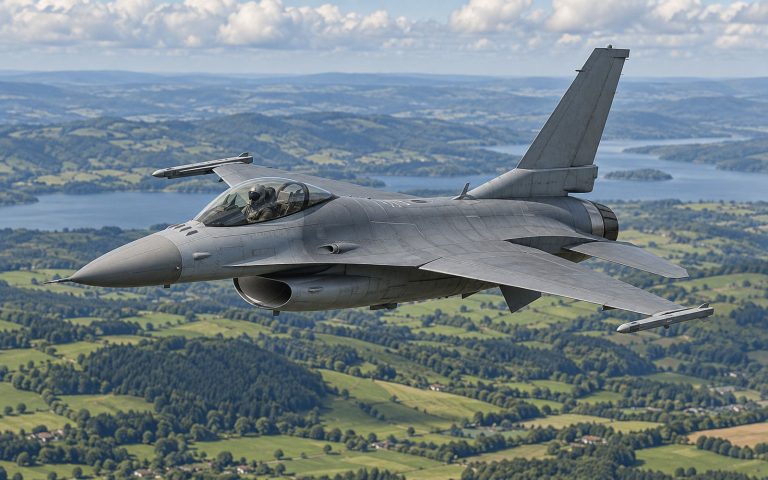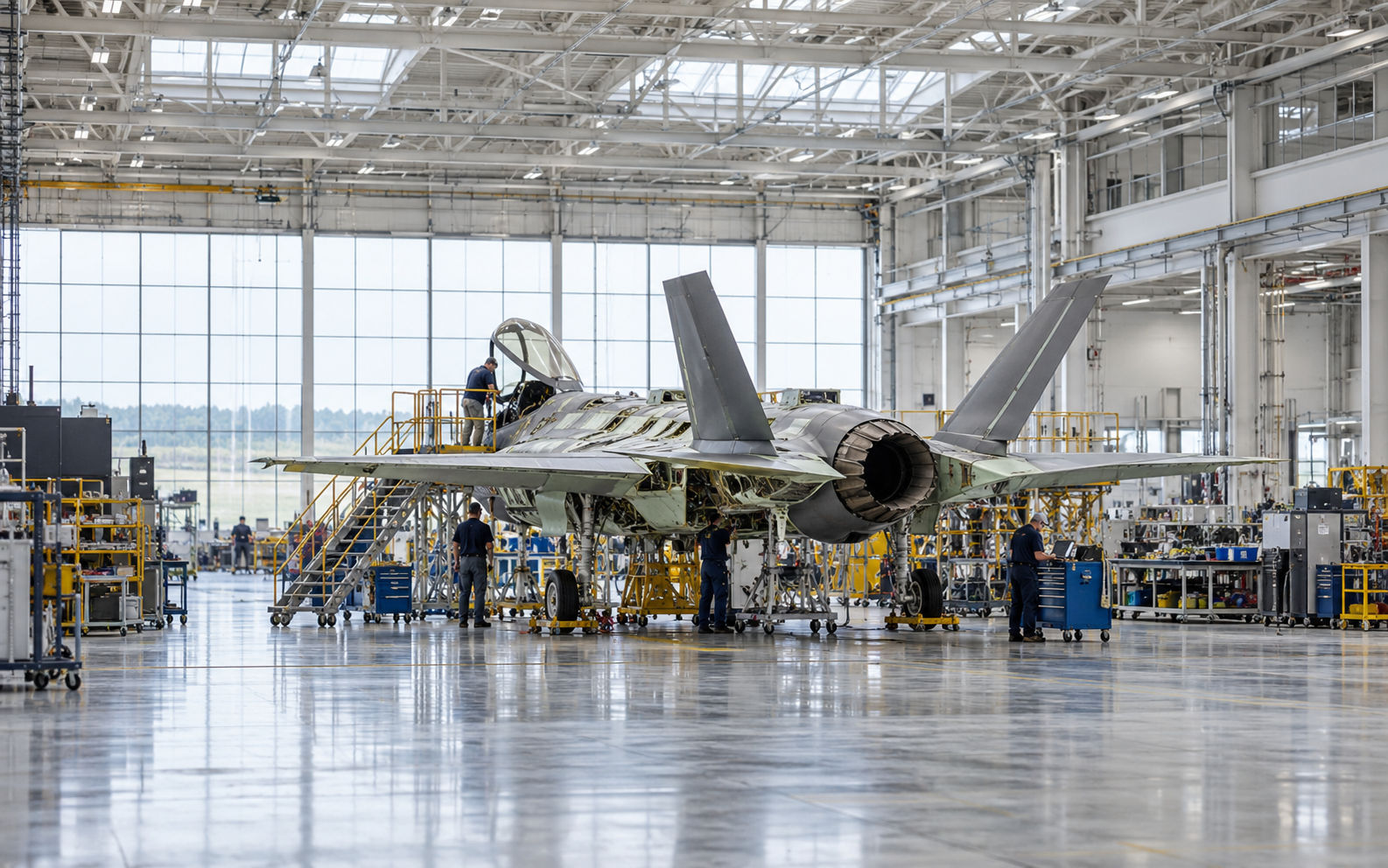
Lockheed Martin was created on 15 March 1995, when two established American aerospace and defence companies combined. Lockheed Corporation was closely associated with aircraft, from transport planes to advanced military designs. Martin Marietta had interests in missiles, space systems and other defence technologies as well as a heritage that reached back to aircraft manufacture. Their earlier histories deserve separate accounts. The story of Lockheed Martin begins with the decision to bring those businesses together after the Cold War.
The political and commercial setting had changed rapidly. For decades, large military programmes had been shaped by competition between the United States and the Soviet Union. With the Soviet Union gone, the US government expected defence contractors to operate in a market with fewer major orders. Companies that had once competed for a succession of large projects faced uncertainty over what could support their factories, research teams and specialist suppliers. Consolidation offered one way to preserve capabilities while seeking a more stable stream of work.
The proposed combination brought complementary strengths. Lockheed contributed major aircraft operations, including the development of the next-generation fighter that would become the F-22, alongside the Hercules transport family and the specialised Skunk Works design organisation. Martin Marietta contributed a particularly strong position in missiles, launch vehicles and electronic systems. The merger therefore created a business whose products extended beyond flying machines. It was intended to compete for contracts that increasingly required several disciplines to be brought together.
Company leaders described the transaction as a merger of equals. That phrase spoke to the ambition to unite two substantial organisations, though it could not remove the practical difficulties of combining their management, workforces and facilities. The new company had to decide where programmes would sit, how engineering teams would cooperate and which activities still suited a market with a smaller number of prime contractors. It also inherited long-running obligations to customers and employees from both predecessors.
The name can sometimes make the history of individual aircraft look simpler than it was. The SR-71, for example, was developed by Lockheed decades before Lockheed Martin existed. A historical article about that aircraft should credit its original developer, while recognising the later corporate succession where relevant. The same distinction applies to earlier Martin designs. Lockheed Martin inherited those legacies; it did not retroactively design every aircraft associated with its predecessors.
At the point of merger, the company had impressive projects but no guarantee of future success. Its leaders needed to make the combined organisation work while major aircraft programmes moved through development. The first years would show whether consolidation could support new engineering as well as reduce duplication. That question, rather than the fame of the names on the merger agreement, shaped the company’s early identity.
Combining the Businesses After 1995
The new corporation began by organising activities that had previously belonged to separate firms. Aircraft factories, missile work, electronics programmes and space operations now sat within a single corporate structure. Integration involved practical decisions about management, purchasing, research and production, while teams continued to meet deadlines on existing contracts. Customers expected continuity even as the company changed around the programmes they had ordered. A merger of this size could not be completed simply by changing the sign outside a factory.
Expansion did not stop in 1995. The following year, Lockheed Martin moved to acquire major defence electronics and systems businesses from Loral. That transaction added capabilities in areas where aircraft and spacecraft increasingly depended on sensors, communications and software. For an aerospace manufacturer, the ability to integrate a complete system was becoming as important as the ability to build an airframe. The company’s shape reflected the industry’s shift towards large contractors coordinating complex projects and extensive networks of suppliers.
One visible test of the organisation arrived quickly in Georgia. The C-130J Super Hercules, developed from the older C-130 family, made its first flight on 5 April 1996. It represented substantial changes within a familiar outline, including new engines, propellers and cockpit systems. Bringing the aircraft into production showed that the newly formed company still had to master the difficult transition from a proven design to a modernised version. The Hercules name connected the programme to Lockheed’s past, but the C-130J was a Lockheed Martin-era aircraft.
International customers soon became important to that programme. The Royal Air Force received its first C-130J in 1999, and other air forces also ordered the type. A transport aircraft offered a very different measure of success from a high-performance fighter. It had to carry people and equipment into demanding conditions, remain maintainable over many years and fit the operating practices of different countries. Deliveries were only the start of a relationship that also involved parts, training and continuing support.
The early years therefore combined change inside the company with commitments outside it. Aerospace projects run over decades; engineers cannot pause a flight-test programme while management redraws organisational charts. The corporation needed enough common direction to function as one business while preserving the specialist knowledge on which its contracts depended. The challenge was particularly clear in military aviation, where the next fighter aircraft would require technologies far removed from the transport work at Marietta.
By the end of the 1990s, Lockheed Martin had a broader portfolio and a clearer role as a prime contractor. Its aircraft programmes demonstrated both continuity and change: established production lines continued, while new designs advanced through testing. The F-22 would provide the most conspicuous early test of what this post-merger company could deliver.
The F-22 and the Next Generation of Military Aircraft
The fighter that became the F-22 Raptor had been selected for development before the 1995 merger. Lockheed led the winning team in the US Air Force’s Advanced Tactical Fighter competition in 1991, working with Boeing and other partners. Lockheed Martin subsequently took that inherited project through detailed development, manufacture and introduction into service. The distinction matters: the competition belonged to Lockheed’s earlier history, while the aircraft that reached operational squadrons was built under the new company’s name.
The F-22 was designed around a demanding combination of capabilities. Its shape and materials were intended to reduce radar detection, while powerful engines and advanced controls helped it fly at high speed and manoeuvre effectively. Sensors and information systems were integral to the design rather than optional equipment added afterwards. These features required close cooperation between airframe makers, engine manufacturers, electronics suppliers and the customer. A successful test flight would be only one step towards an aircraft that pilots could operate and maintain in a squadron.
Lockheed Martin rolled out the first engineering and manufacturing development F-22 in 1997, and it flew later that year. Flight testing explored its handling, performance and systems over an extended period. Engineers also had to show that manufacturing methods could reproduce a highly specialised airframe to the required standard. The programme illustrated how long the journey could be between the selection of a promising design and the arrival of a usable military capability.
The US Air Force declared initial operational capability in December 2005. That milestone meant that an operational unit could undertake assigned missions; it did not mean that development, training or improvements had ended. The Raptor’s arrival also occurred in a world different from the one in which the Advanced Tactical Fighter requirement had first emerged. The Cold War had finished, and decisions about the number of aircraft to buy were made amid changing priorities and costs.
Production eventually ended with a smaller fleet than originally envisaged. The final aircraft was delivered in 2012. F-22s remained in service, supported by continuing work on their equipment and readiness. This made the programme both a technological achievement and a lesson in the financial realities of specialised military aircraft. Exceptional performance could be accompanied by limits on fleet size, with consequences for training, deployment and maintenance.
For Lockheed Martin, the F-22 established an identity that went beyond the aircraft it had inherited. It showed the company managing a project built around stealth, integrated electronics and demanding flight performance. It also demonstrated that a fighter programme could not be judged solely by the appearance of the finished aeroplane. What counted was the ability to turn a design into an operational fleet and support it across its service life. A second, much larger fighter undertaking was already coming into view.
The F-35 Programme and International Expansion
While the F-22 moved through testing, the United States was seeking a different kind of fighter programme. The Joint Strike Fighter was intended to serve several armed services and international partners with related aircraft rather than a single specialised type. Lockheed Martin’s X-35 demonstrators competed for that work, and the company-led team won the development contract in October 2001. The result became the F-35 Lightning II, the programme most closely associated with Lockheed Martin in the twenty-first century.
The plan called for three principal versions. The F-35A uses conventional take-off and landing. The F-35B is designed for short take-off and vertical landing, using a lift fan system. The carrier-based F-35C has changes suited to operation at sea. They share important technologies and a common programme, but they are not identical aircraft. Different take-off methods, structures and operational requirements made development and testing more complicated than the simple idea of a single fighter might suggest.
The first F-35A flew in December 2006. Trials subsequently examined the capabilities of each version, including the difficult transition between forward flight and vertical landing for the F-35B. Stealth shaping, sensors, software and the presentation of information to a pilot were central to the programme. A modern fighter had to process and share information as well as fly. The manufacturer also needed a production network capable of building aircraft and supporting operators spread across several countries.
International participation changed the company’s reach. Britain and other partners were involved in development, and further countries selected the aircraft for their air forces. Industrial work, training arrangements and support networks extended beyond the United States. Export customers brought differing requirements and timetables, while a shared programme linked their fleets to continuing upgrades. The F-35 thus became both an aircraft family and a long-term international undertaking involving governments, manufacturers and military users.
The scale of the project brought sustained scrutiny. Testing and production overlapped, creating the possibility that discoveries during development would require changes to aircraft already built. US government auditors have documented delays, increasing costs and challenges with keeping aircraft available for missions. In particular, software and hardware modernisation have proved difficult to deliver on the original schedule. Those findings belong in any balanced account alongside the aircraft’s technical ambitions and expanding user base.
The F-35’s story is still being written. Lockheed Martin continues to build and support aircraft while governments assess what they cost to operate and what new capabilities they need. Its significance lies partly in the number of countries tied to the programme and partly in the way software, logistics and upgrades have become inseparable from airframe manufacture. By the time the F-35 reached widespread service, the company’s aviation business had become part of a much wider enterprise.
Transport Aircraft, Space Systems and Other Defence Work
Fighters receive much of the public attention, but Lockheed Martin’s post-merger work has been broader. The C-130J continued to reach customers in a range of configurations, carrying out tasks such as military transport, humanitarian relief and specialist missions. Its value rests on dependable use in circumstances very different from those faced by a fighter. Changes to equipment and support over time have helped the transport remain relevant to air forces with differing needs.
The company also continued to make and support other aircraft associated with its inherited production and development lines. Existing fleets needed updates, spare parts and engineering assistance long after initial delivery. This service work is easy to miss when aircraft histories concentrate on first flights. For a manufacturer, however, keeping equipment usable across decades is an important part of the business. It connects factory engineering to the practical experience of crews and maintainers.
A major expansion came in 2015, when Lockheed Martin acquired Sikorsky. Helicopters brought a different branch of aviation into the group, including established military rotorcraft programmes. Sikorsky retained a recognisable name and history of its own, which should be treated separately when discussing aircraft developed before the acquisition. Within Lockheed Martin, the purchase added rotary-wing expertise and support obligations to an already wide range of defence activities. It also brought aircraft with their own established operators and maintenance networks.
Beyond aviation, the company’s space division developed spacecraft and related systems. NASA selected Lockheed Martin as the lead contractor for the Orion spacecraft, designed for deep-space missions under the Artemis programme. Orion’s role is to carry astronauts and support their journey beyond low Earth orbit. The programme requires demanding work on structures, controls and safety, even though the finished vehicle is not an aircraft. It shows why a guide to Lockheed Martin cannot stop at the edge of an airfield.
Missiles, fire-control equipment, sensors and naval systems form further parts of the organisation. Some technologies and working methods cross boundaries between these fields, particularly where complicated systems must share information and function reliably together. It would nevertheless be misleading to describe every product as an aircraft programme. The company is an aerospace and defence contractor with several major lines of work, each subject to its own customers, requirements and risks.
Seen together, the transport, helicopter and space activities explain the breadth created by the merger and subsequent acquisitions. Some products are new developments, while others are updated descendants of earlier designs. Their histories should be credited to the organisations and teams that actually made them. For readers of an aviation guide, that distinction makes it easier to follow how a single modern company came to contain several separate traditions of flight, with very different engineering cultures and priorities.
Lockheed Martin Today and Its Place in Aviation
Lockheed Martin now operates across aeronautics, missiles and fire control, rotary and mission systems, and space. Those broad divisions help explain why a company famous for aircraft also works on subjects that may never leave the ground or travel through the atmosphere. Its modern aviation identity rests especially on the F-35, support for the F-22, the continuing C-130J programme and Sikorsky helicopters. Each brings a different relationship between design, production and service.
The size of these programmes makes their long-term support as important as their manufacture. An aircraft delivered today may remain in service for decades, requiring spare parts, trained technicians and periodic changes to its systems. Software updates can alter what a modern military aircraft is able to do, while problems with parts or maintenance can restrict how often it flies. The US Government Accountability Office has drawn attention to F-35 sustainment costs and readiness, illustrating how a programme’s success must be measured after delivery as well as on the factory floor.
International partnerships are another defining feature. Governments buy equipment for their own needs, but they also depend on manufacturers and other countries for components, upgrades and technical support. The F-35 makes those connections especially visible. The C-130J similarly serves a variety of operators whose missions differ. For the company, this means managing common designs and supply arrangements while responding to national requirements. For customers, it creates opportunities to share support but also a long relationship with the original supplier.
New work continues alongside those obligations. Research teams explore possible future aircraft technologies, while space projects extend the organisation’s reach beyond conventional aviation. The existence of a research programme does not guarantee that a proposed aircraft will enter service. History offers many examples of concepts that were tested, altered or abandoned. A careful account of Lockheed Martin should distinguish operational equipment from experiments and plans, particularly when announcements describe possibilities that have yet to be proven.
The company’s influence also raises questions about the structure of the defence industry. When relatively few contractors can lead exceptionally complex programmes, governments must weigh technical capability against cost, competition and dependence on suppliers. Lockheed Martin’s achievements, contracts and difficulties all sit within that wider setting. The story is more informative when it includes the people who design and maintain equipment, the partners who build it and the public institutions that pay for and assess it.
Lockheed Martin should therefore be understood as a company founded in 1995 with a continuing, varied story of its own. It inherited distinguished names and aircraft, then developed and supported major new programmes under the merged organisation. The F-22, F-35, C-130J, helicopters and spacecraft reveal both the scale and the limits of a single manufacturer label. Earlier Lockheed and Martin aircraft lead back to their original makers; Lockheed Martin’s guide begins where those histories joined.