
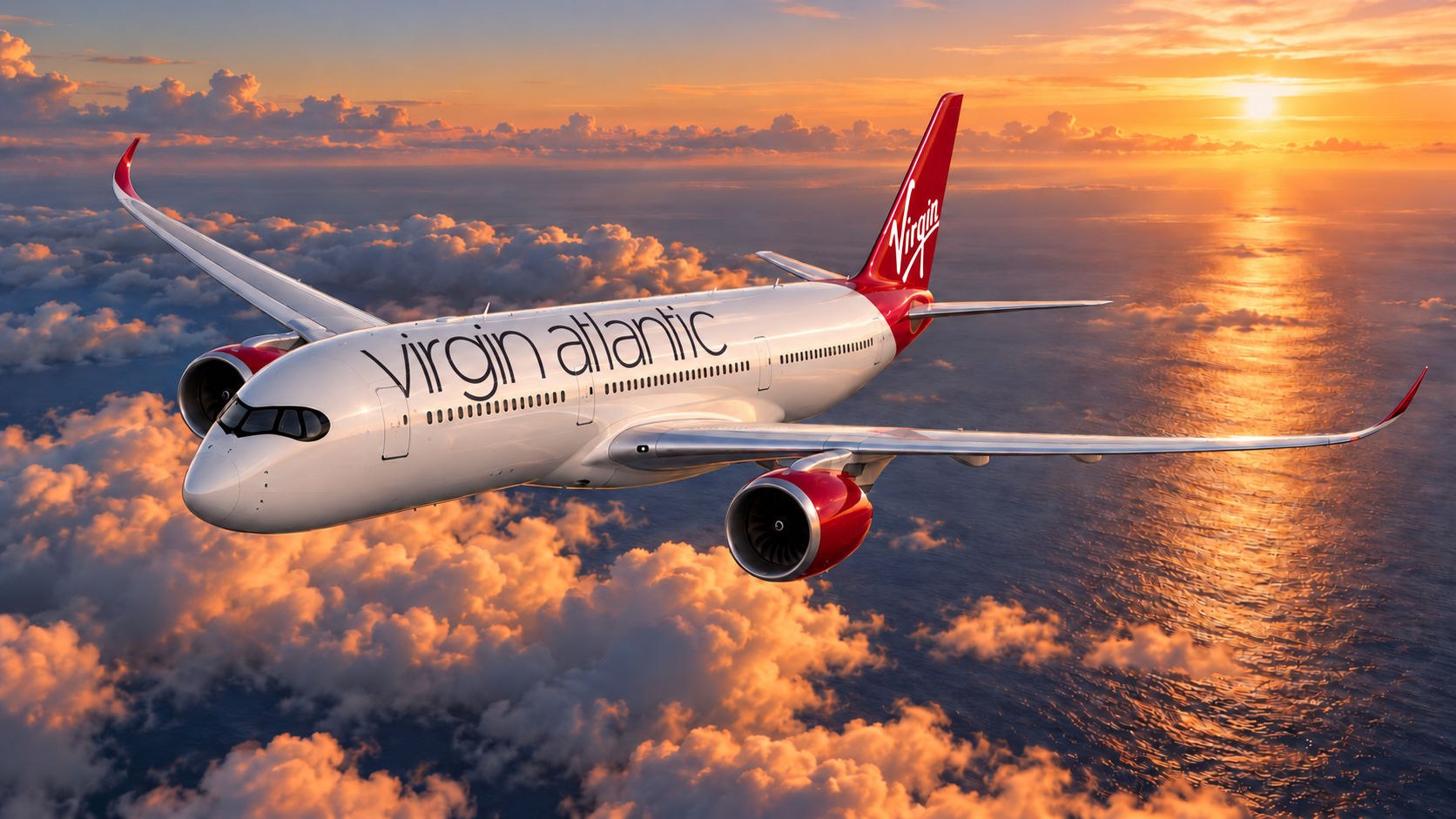
Virgin Atlantic began with a single Boeing 747 flying across the Atlantic. More than four decades later, it remains a long-haul airline with a distinctive place in British aviation. Its red-tailed aircraft connect the UK with destinations across North America and beyond, while its history reflects both the glamour and the hard economics of international flying.
A new airline crosses the Atlantic
Virgin Atlantic’s first flight departed London Gatwick for Newark, New Jersey, on 22 June 1984. The aircraft was a Boeing 747-200, an ambitious choice for a new airline operating just one route. Richard Branson’s Virgin Group brought a recognisable name and a flair for publicity to the venture, but attracting attention was only the beginning. The airline had to persuade passengers to choose a newcomer for a journey already served by established carriers.
Virgin Atlantic sought to stand out through its onboard service as well as its branding. Over the following decades, it developed a reputation for features intended to make long flights more comfortable and entertaining. Its Upper Class and Premium cabins became important parts of its identity. The airline expanded beyond its original transatlantic service, although routes and destinations have changed repeatedly as demand and commercial conditions have shifted.
Building a long-haul network
North America has remained central to Virgin Atlantic’s network, particularly flights between London Heathrow and the United States. The airline also operates long-haul services from Manchester, with routes spanning leisure and business markets. Heathrow is its principal base, while Manchester gives passengers in northern England an alternative departure point for selected destinations. Because airline schedules change by season, its current route map is a better guide to individual services than any permanent list in an article.
Partnerships extended Virgin Atlantic’s reach beyond the destinations served by its own aircraft. It developed a transatlantic joint venture with Delta Air Lines, Air France and KLM, coordinating services and connections across their networks. On 2 March 2023, Virgin Atlantic joined the SkyTeam alliance. For passengers, such arrangements can make it easier to connect between airlines and to earn or use frequent-flyer benefits. For the airline, they provide a way to offer a wider network without operating every flight itself.
Aircraft past and present
For many years, the Boeing 747 was strongly associated with Virgin Atlantic. The type carried its first passengers in 1984 and remained part of the airline’s story for decades. Virgin Atlantic has since moved towards an all twin-engine long-haul fleet. Its aircraft range includes the Airbus A350-1000, Boeing 787-9 and Airbus A330neo; its published fleet page also lists the older A330-300 during the transition.
These aircraft serve different capacity and route requirements, but fleet changes also affect what passengers find on board. New aircraft bring different cabin layouts, seats and entertainment systems. Virgin Atlantic has ordered more A330neos as part of a plan to replace its older A330-300s. The company has described a target fleet for 2028, though planned deliveries and retirements should not be confused with aircraft already in service today.
The A350-1000 provides a direct link to the first aircraft guide on World Aviation Guide. Virgin Atlantic is one of the airlines operating the larger A350 passenger variant, using a modern widebody that continues the airline’s long-haul focus without the four engines of its former 747s.
Turbulence and recovery
Like other international airlines, Virgin Atlantic faced a severe fall in demand when the COVID-19 pandemic disrupted travel in 2020. It reduced its network, fleet and workforce and completed a privately funded recapitalisation to support the business through the crisis. The period was a reminder that even a well-known airline depends on sustained demand for travel and the ability to keep its aircraft flying.
Virgin Atlantic subsequently rebuilt its operation around its long-haul network, partnerships and changing fleet. The airline that made its name with a single 747 now flies modern twin-engine aircraft and offers connections through a global alliance. Its story is one of continual adaptation: the branding may be instantly recognisable, but the routes, aircraft and business behind it have never stood still.